
 Menu
 Close
NGBS INSIGHT
A dedicated engineering team should work inside your operating model
External engineering capacity creates less friction when engineers use the client’s tools, standards, ceremonies and decision paths instead of operating through a parallel delivery layer.
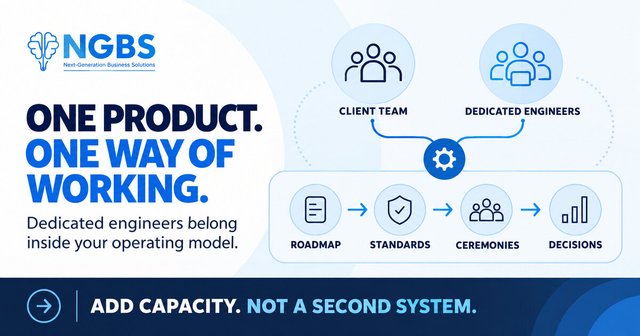
Adding a dedicated engineering team should increase delivery capacity. It should not require the client to operate a second delivery system alongside its own.
Yet this is what often happens. Internal engineers work in one set of tools and ceremonies while an external team works through separate managers, status reports and approval paths. Information crosses the boundary slowly. Questions are rewritten before they reach the right person. Decisions lose context as they move between layers.
The external team may be capable, but the operating model makes useful collaboration harder than it needs to be.
A dedicated team creates more value when its engineers work inside the client’s normal engineering environment—with clear access to the same priorities, standards, communication and decision-makers as the people already building the product.
A parallel delivery layer creates hidden work
The cost of separation is rarely visible in a staffing plan.
A product leader explains a requirement to an account manager. The account manager passes it to a delivery manager. The delivery manager interprets it for the engineering team. When an engineer finds an architectural constraint, the question travels back through the same chain.
Every handoff consumes time and creates an opportunity for meaning to change. Senior client leaders spend more time translating decisions, reconciling reports and checking whether the external team understood the original intent.
The result is coordination work disguised as governance.
Governance is necessary. Additional communication layers are not always necessary. When engineers can participate directly in the client’s established workflow, governance becomes clearer because decisions and evidence remain where the client already expects to find them.
Integration starts with the working environment
Working inside the client’s operating model does not mean copying every internal habit without question. It means establishing one shared place for the work.
That normally requires alignment across four areas.
Communication
Dedicated engineers should join the channels, meetings and conversations relevant to their work. They need direct access to product owners, technical leaders and the internal engineers whose decisions affect them.
Direct communication does not remove accountability. It makes accountability easier to observe. Questions can be answered by the person with the relevant context, and important decisions do not depend on an intermediary remembering every detail.
Delivery workflow
The external team should plan and track work through the client’s normal delivery system wherever practical. Backlogs, acceptance criteria, dependencies, demonstrations and release decisions should not be duplicated across two disconnected tools.
A shared workflow gives the client continuous visibility. It also allows external engineers to understand how their work relates to broader product priorities rather than treating each assigned task as an isolated request.
Technical standards
Engineers should work within the client’s established expectations for architecture, code review, testing, security, deployment and documentation.
If a standard is unclear or no longer suitable, the team should raise that concern through the same technical decision process used by the internal organisation. External engineers should contribute judgment, but they should not quietly create a separate engineering culture inside the same product.
Decision paths
Teams need to know who can decide what.
Product trade-offs, architectural choices, operational risks and delivery priorities often belong to different owners. A dedicated team should be able to reach those owners without turning every question into an escalation.
Clear decision paths reduce delay while preserving the client’s authority over the product.
Direct collaboration is not the same as unmanaged access
Some organisations respond to delivery friction by giving an external team access to every channel and meeting. That is not integration; it is noise.
The team needs access to the conversations that shape its work, not an invitation to the entire organisation. Roles, responsibilities and escalation routes should remain explicit.
The client should still know who owns the roadmap, who approves technical decisions and who is accountable for delivery. The delivery partner should still provide leadership and support where its engagement model requires them.
The goal is not unrestricted communication. It is communication without unnecessary distortion.
The client should retain control without carrying every operational task
An integrated dedicated team does not require the client to become responsible for employment administration, payroll, HR support or replacement planning.
Those responsibilities can remain with the engineering partner while day-to-day product and technical collaboration happens directly with the client. This creates a useful division:
- The client controls product direction, priorities and technical standards.
- Engineers participate directly in the client’s working environment.
- The engineering partner manages employment, support and continuity.
The boundaries should be clear enough that engineers know where to go for a product decision, a technical decision or a people-related concern.
Signs that a second operating system is forming
Leaders should look for practical warning signs:
- The external team receives most requirements through a client-facing intermediary.
- The client and external team maintain different versions of the backlog.
- Engineers cannot explain why a priority changed.
- Architectural questions wait for a weekly status meeting.
- Reports describe activity but do not expose decisions, risks or working software.
- Client leaders discover delivery problems after they have already affected a milestone.
Any one of these can occur temporarily. When several become normal, the relationship is probably creating more separation than capacity.
Integration should begin during onboarding
The first weeks establish how the team will work later.
Before delivery begins, the client and engineering partner should agree which systems the team will use, which ceremonies matter, who owns each class of decision and how risks will be raised. Engineers should receive product context alongside technical access—not only a list of tickets.
Early onboarding should also make the team’s support structure visible. Clients need to know who handles continuity and people operations, while engineers need to understand how their responsibilities connect to the client’s goals.
This preparation reduces the temptation to introduce a separate vendor workflow simply because it feels easier at the beginning.
One product should have one visible way of working
External engineers do not become effective by sitting closer to the client on an organisation chart. They become effective when they can see the context behind the work, participate in the right conversations and operate within clear technical and delivery boundaries.
At NGBS, dedicated engineers work directly with client teams through their existing tools, standards and operating practices. NGBS remains responsible for employment, support and continuity, while the client retains control of its product and engineering direction.
The objective is straightforward: add engineering capacity without adding a second operating system around the same product.
Related insights
NGBS INSIGHT
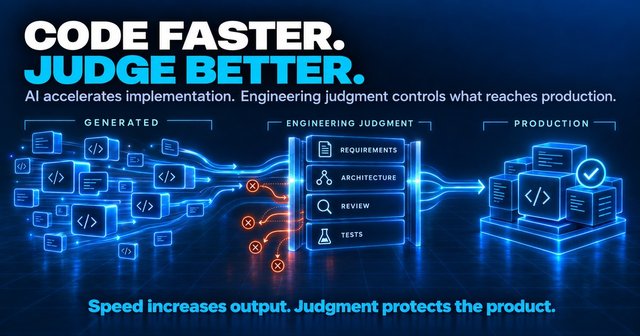
AI Coding Agents Move the Bottleneck From Code Generation to Engineering Judgment
AI agents can generate code quickly, but reliable delivery still depends on clear requirements, technical judgment, risk-based review and accountable production ownership.
Read insight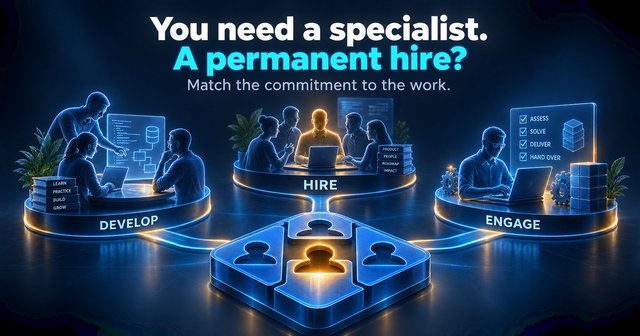
NGBS INSIGHT
You Need a Specialist. Do You Need a Permanent Hire?
A critical skills gap does not always require a permanent role. Assess the workload, urgency and ongoing ownership before choosing how to close it.
Read insight