
 Menu
 Close
NGBS INSIGHT
Engineering standards should scale with the team
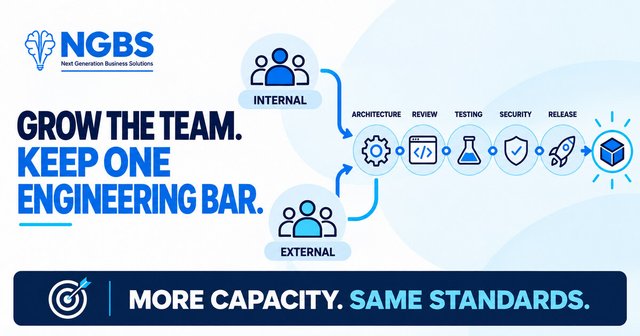
Adding external engineers should reinforce the client’s architecture, review, testing and release standards—not create exceptions around the same product.
Convert the following structure faithfully into the current schema’s Portable Text representation. Preserve headings, paragraphs and meaning. Generate valid unique `_key` values where the schema requires them. Do not rewrite, summarise or add content.
When an engineering organisation adds capacity, it also adds variation.
New engineers bring different habits, assumptions and experience. That diversity can improve the product, but only when everyone understands the technical standards that protect it. Without that shared foundation, a larger team can create more code while making the system harder to change safely.
This risk is sometimes treated as an outsourcing problem. It is really a scaling problem. Internal hiring can produce the same result when standards exist only in the heads of long-serving engineers or are applied differently across teams.
External engineers should not work under a separate, reduced engineering bar. They should contribute through the same architecture, review, testing, security and release expectations as the client’s internal team.
Standards must be usable, not merely documented
Most engineering organisations have standards somewhere. They may live in onboarding documents, repository files, architecture diagrams, ticket templates or conversations with technical leaders.
The question is whether an engineer can use them while making a real decision.
A statement such as “write maintainable code” does not explain how changes are structured, reviewed or tested. “Follow security best practices” does not identify the controls required before a release. “Document important decisions” is ineffective when nobody knows which decisions are important or where the record belongs.
Useful standards connect principles to normal delivery. They tell engineers what evidence is expected, who can approve an exception and how a disagreement should be resolved.
If a capable new engineer cannot discover the standard without asking the right person, the organisation has knowledge but not yet a scalable system.
Define one engineering bar across five areas
The complete engineering handbook does not need to be rewritten before a team grows. Leaders should first make the standards that affect everyday delivery explicit.
1. Definition of done
Teams need a shared understanding of what completion means.
Code written is not the same as work completed. Depending on the product, completion may require peer review, automated tests, security checks, documentation, deployment to a target environment and acceptance by the product owner.
The definition should be demanding enough to protect the product and practical enough to apply consistently. If urgent work follows a different path, the exception and the follow-up obligation should be visible.
2. Code-review responsibility
Review is not only a gate for detecting mistakes. It is how teams share context and reinforce engineering judgment.
Incoming engineers should know who can approve changes, what reviewers are expected to examine and when specialist input is required. A change affecting authentication may need different scrutiny from a small interface adjustment. A database migration may need operational review as well as code review.
External engineers should participate on both sides of this process. They need their work reviewed, and as they earn context, they should also review the work of others. That is how they become contributors to the engineering system rather than a separate delivery queue.
3. Architectural decisions
Every design choice does not require a formal record, but consequential decisions should leave evidence.
Teams should agree when an architectural decision record is required, who owns the decision and who needs to be consulted. The record should explain the context, alternatives and consequences rather than simply announce the chosen technology.
This prevents the architecture from fragmenting as more people contribute. It also gives new engineers a way to understand why the system looks as it does before proposing another pattern for the same problem.
4. Testing and release confidence
Testing standards should reflect the risks of the product, not a generic coverage target.
Engineers need to know which behaviours require automated protection, what must be checked before merging and how changes are verified after deployment. Release expectations should also cover observability, rollback and ownership when a change behaves differently in production.
A team that adds features but weakens release confidence is not creating sustainable capacity. It is moving work from development into future incidents.
5. Security and operational ownership
Security cannot remain a final review performed by someone outside the delivery flow.
Engineers should understand how secrets, personal data, access control, dependencies and audit requirements are handled in the client’s environment. They should also know how vulnerabilities and incidents are escalated.
Operational ownership matters for the same reason. The people changing a service should understand how it is monitored, supported and recovered. This connection improves design decisions long before anything fails.
Onboard through real engineering work
Standards become meaningful when they are applied.
An effective onboarding path combines concise reference material with a small, representative change. The new engineer sees the repository structure, follows the review process, runs the required checks and observes how a decision is discussed.
Early changes should receive thoughtful feedback. Review comments that explain why a standard exists transfer more judgment than a list of corrections. Pairing with an experienced engineer can also expose assumptions that documentation missed.
The goal is not to make the newcomer imitate existing code without question. It is to give them enough context to work safely and enough access to challenge a standard when they see a better approach.
Exceptions need ownership
No standard covers every situation. Mature engineering organisations allow exceptions, but they do not allow invisible ones.
When speed, legacy constraints or operational urgency requires a different approach, the team should record what changed, who accepted the risk and what follow-up is required. Temporary compromises should have an owner rather than becoming permanent through neglect.
This matters more as capacity grows. Without an explicit exception path, engineers either ignore standards to keep work moving or wait unnecessarily because they cannot find the authority to decide.
New engineers should improve the system
Consistency does not mean protecting every existing practice from scrutiny.
External engineers often bring experience from other products and delivery environments. They may identify a missing automated check, a review bottleneck or a simpler architectural pattern. A healthy operating model gives them a route to propose that improvement without creating a competing standard inside their own work.
The strongest sign of integration is not silent compliance. It is informed contribution: engineers understand the current bar, work within it and help raise it through evidence.
More capacity should mean more confidence
Scaling an engineering team should increase what the organisation can deliver without reducing confidence in how that software is built.
At NGBS, dedicated engineers work within the client’s technical standards, tools and decision paths. Clients retain control of architecture and engineering direction, while NGBS supports the people and continuity behind the team.
The principle is simple: one product should have one visible engineering bar. When internal and external engineers share that bar, additional capacity can strengthen the system instead of creating another set of exceptions around it.
Related insights
NGBS INSIGHT
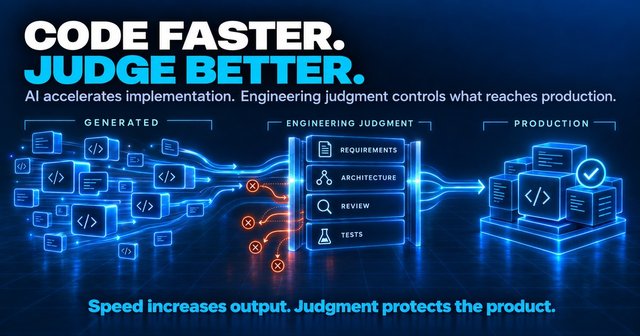
AI Coding Agents Move the Bottleneck From Code Generation to Engineering Judgment
AI agents can generate code quickly, but reliable delivery still depends on clear requirements, technical judgment, risk-based review and accountable production ownership.
Read insight
NGBS INSIGHT
You Need a Specialist. Do You Need a Permanent Hire?
A critical skills gap does not always require a permanent role. Assess the workload, urgency and ongoing ownership before choosing how to close it.
Read insight