
 Menu
 Close
NGBS INSIGHT
External engineering capacity needs internal technical ownership
Additional engineers can expand delivery capacity, but the client must retain clear ownership of product priorities, architecture boundaries and the decisions that shape the system.
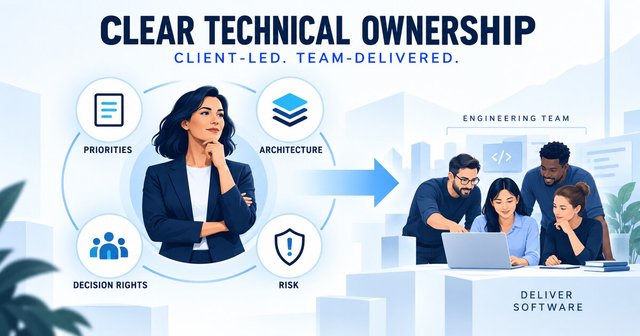
Adding engineers can increase the amount of work a team is capable of delivering.
It does not automatically answer which work matters, how the product should evolve or who can make decisions when priorities and technical constraints conflict.
Those responsibilities belong to technical ownership.
When ownership is clear, an external engineering team can contribute judgment and move delivery forward confidently. When it is missing, even strong engineers become dependent on scattered stakeholders. Decisions wait, architecture drifts and activity increases without proportional progress.
External capacity is most effective when it strengthens a client-led engineering system. It should not require the client to surrender control, but it does require someone inside the organisation to exercise that control deliberately.
Capacity and ownership solve different problems
Capacity answers a practical question: do we have enough engineering time and skill to execute the work?
Ownership answers a different set of questions. What outcome are we pursuing? Which constraints matter? Who decides between competing approaches? What level of risk is acceptable? When should a decision be escalated?
An organisation can have one without the other. A small team with strong ownership may know exactly what to do but lack the capacity to deliver quickly. A larger team with weak ownership may complete many tasks while the important decisions remain unresolved.
Adding engineers helps the first situation. It can make the second more visible and more expensive.
External team growth should therefore begin with a named client-side technical owner. The title matters less than whether that person has the authority, context and availability to guide the system.
Retain ownership of four things
Clients do not need to prescribe every implementation detail. They do need to retain clear ownership of the decisions that define success.
1. Product and delivery priorities
The client should decide which outcomes matter and how competing demands are ordered.
External engineers can expose dependencies, estimate complexity and recommend sequencing. Their insights should inform priority decisions, not replace accountable product leadership.
Without a clear priority owner, engineers receive conflicting signals from product, sales, operations and individual stakeholders. The result is not autonomy. It is ambiguity.
2. Architecture boundaries
Engineers make design decisions every day, and many should remain close to the work. The client should still define the boundaries within which those decisions are made.
That includes the principles the system must preserve, the technologies that are supported, the security and regulatory constraints that cannot be traded away, and the changes that require wider review.
The external team should participate actively in architecture. It may bring specialists who identify better options or challenge an inherited assumption. Final accountability for the product’s technical direction, however, must remain visible inside the client organisation.
3. Decision rights
Teams slow down when every question needs executive approval. They also create risk when important choices are made without the appropriate context.
Clear decision rights establish the middle ground. Engineers should know which decisions they can make independently, which require consultation and which require explicit client approval.
For example, a team may refactor within an agreed component, consult on a new shared dependency and require approval before changing an external API contract. Leaving these boundaries implicit guarantees waiting and rework.
4. Acceptance of risk and trade-offs
Most meaningful engineering decisions involve trade-offs. A faster release may create operational work. A flexible design may cost more now. A migration may reduce long-term risk while delaying a visible feature.
Engineers should describe these options clearly and recommend a course of action. The person accountable for the product must decide which trade-off fits the organisation’s priorities, commitments and risk tolerance.
That decision cannot be delegated accidentally through an unanswered message or an ambiguous ticket.
Technical ownership should enable, not control
Retaining ownership does not mean creating a command-and-control relationship with the external team.
If the technical owner dictates every method name, database query and implementation step, experienced engineers have little room to contribute. The client becomes a bottleneck, and the added capacity remains artificially dependent.
Effective ownership sets direction, clarifies constraints and creates fast paths for decisions. Within those boundaries, engineers should be expected to investigate, propose solutions and make routine technical choices.
The owner maintains coherence rather than supervising every action, ensuring local decisions support the wider product and significant trade-offs remain visible.
Create a dependable decision rhythm
Technical ownership must be available in practice, not only present on an organisation chart.
A dedicated team needs a predictable rhythm for resolving questions. Some decisions can be handled during refinement or architecture reviews. Others need a named asynchronous channel with an expected response time. High-impact risks require an escalation route that does not depend on finding the right person informally.
It is useful to distinguish between decision latency and engineering delivery time. A task that spends two days waiting for clarification has not taken two extra days to engineer. If this pattern repeats, measuring developer activity will hide the real constraint.
Record consequential decisions where the team can find them. A concise architecture record or a clear note attached to the relevant work is usually more useful than a long meeting summary. The goal is to preserve the reasoning, prevent repeated debate and help new team members understand the boundaries they have inherited.
Let external leaders contribute without blurring accountability
A mature engineering partner may provide senior engineers, technical leads or delivery leadership. These people can coordinate work, mentor the team, improve practices and bring well-reasoned recommendations to the client.
That contribution is valuable precisely because it supports better client decisions. It should not make accountability harder to locate.
If an external lead owns day-to-day technical coordination, define the relationship explicitly. State which decisions the lead can make, which decisions are recommendations and which client leader remains accountable for product and architecture direction.
This clarity protects both sides. The external lead can act confidently within an agreed mandate, while the client retains control of the roadmap, standards and system it ultimately owns.
Assess ownership before adding more people
Before expanding a team, ask a few direct questions:
- Is there one clearly named client owner for technical direction?
- Can that person resolve or route important decisions promptly?
- Are architecture boundaries and non-negotiable constraints understood?
- Does the team know which choices it can make without approval?
- Are significant trade-offs recorded with an accountable decision-maker?
Weak answers do not always mean the organisation should delay hiring. They do mean the ownership system needs attention as capacity grows.
At NGBS, dedicated engineers become part of the client’s team and work within its roadmap, standards and delivery model. Clients interview and select the engineers, direct the product and retain technical control. NGBS provides the employment, continuity and operational support behind the team.
The principle is straightforward: external engineers can expand execution and strengthen technical thinking, but ownership must remain clear. Add capacity around accountable leadership, and the team can move faster without losing control of the product.
Related insights
NGBS INSIGHT
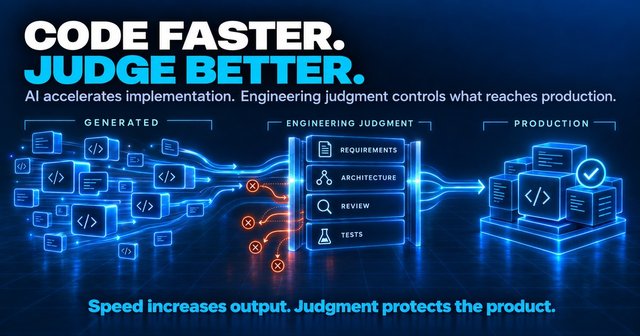
AI Coding Agents Move the Bottleneck From Code Generation to Engineering Judgment
AI agents can generate code quickly, but reliable delivery still depends on clear requirements, technical judgment, risk-based review and accountable production ownership.
Read insight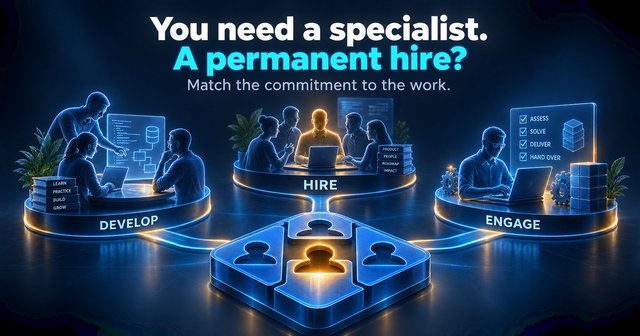
NGBS INSIGHT
You Need a Specialist. Do You Need a Permanent Hire?
A critical skills gap does not always require a permanent role. Assess the workload, urgency and ongoing ownership before choosing how to close it.
Read insight