
 Menu
 Close
NGBS INSIGHT
Interview external engineers as carefully as your own hires
Clients build stronger dedicated teams when they assess external engineers directly for technical judgment, communication and fit with the way their organisation works.
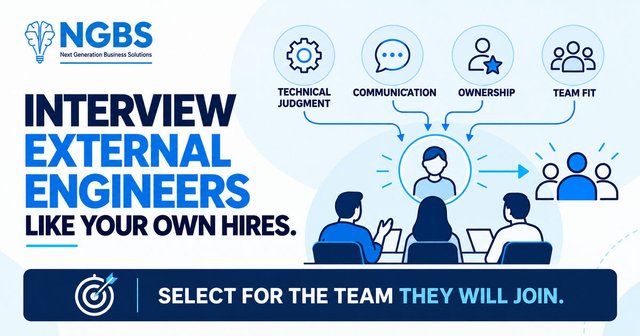
When a company hires an internal engineer, it normally invests time in understanding how that person thinks, communicates and works with others. Technical ability matters, but so do judgment, curiosity and the ability to operate within the organisation’s standards.
External engineers deserve the same level of attention.
A dedicated engineer may work on the same product, review the same code and influence the same architectural decisions as an internal colleague. Selecting that person from a CV or generic skills test creates a gap between the importance of the role and the care taken to fill it.
The client should meet and assess every proposed engineer before the engagement begins. The purpose is not to repeat recruitment work. It is to confirm that the person can become a trusted member of the actual team they will join.
A supplier’s assessment answers only part of the question
A responsible engineering partner should already have verified an engineer’s experience and core technical capability. It should understand the person’s strengths and avoid presenting candidates who do not meet the requirement.
That assessment is necessary, but it cannot determine how well the engineer fits a particular client environment.
Only the client knows the realities of its product: how decisions are made, where the architecture is fragile and which behaviours make collaboration effective. Two engineers with similar technical backgrounds can perform very differently in that context.
The partner can establish whether a candidate is credible. The client must decide whether that candidate is right for its team.
Assess the work the engineer will actually do
An effective interview should reflect the role rather than become a test of recall.
If the engineer will maintain a mature SaaS platform, discuss how they would investigate a production defect, change a heavily used component or reduce risk in unfamiliar code. If the role involves a new product area, explore how they turn incomplete requirements into technical questions and incremental delivery. If they will collaborate across time zones, examine how they communicate progress, surface blockers and document decisions.
The strongest evidence often comes from a realistic conversation about trade-offs. Ask the engineer to explain an important decision from previous work: what alternatives they considered, what they chose and what they would do differently now.
This reveals more than whether they remember a framework’s syntax. It shows how they reason when the answer is not obvious.
Evaluate four dimensions together
Technical capability remains essential, but a dedicated-team interview should consider four connected dimensions.
1. Relevant technical depth
Can the engineer work effectively in the technologies and problem space the role requires? Look for understanding beneath tool names. An experienced engineer should be able to explain constraints, failure modes, testing choices and the consequences of a technical decision.
The goal is not to find someone who has encountered every possible scenario. It is to establish whether their fundamentals are strong enough to navigate unfamiliar ones.
2. Engineering judgment
Good engineers do more than produce code. They decide when to investigate further, when to simplify, when to challenge an assumption and when to ask for help.
Discuss situations involving incomplete information, technical debt or competing priorities. Listen for how the candidate balances delivery speed, quality, security and maintainability. The best answer is rarely a universal rule; it is a reasoned choice grounded in context.
3. Communication
A dedicated engineer needs to make work understandable to people who do not share all of their context. Can they explain a technical risk clearly? Do they ask precise questions? Can they disagree without becoming defensive? Do they listen and adapt when new information changes the problem?
Communication should be assessed throughout the interview, not through a separate question about teamwork.
4. Operating-model fit
Consider whether the engineer can work inside the client’s established way of delivering software. A highly capable person may still struggle if the environment expects a different level of autonomy, documentation or collaboration.
This is not about hiring people who all think alike. It is about making expectations visible. Engineers should understand how priorities reach them, who owns technical decisions and what accountability looks like before they accept the role.
Avoid turning the process into a second recruitment department
Client involvement does not need to create a long or repetitive hiring process.
The engineering partner should handle sourcing, initial qualification and candidate preparation. The client’s role is to assess the small number of credible people who may join its team.
A focused process can often be completed in two conversations: one centred on technical judgment and another on collaboration and working expectations. These can be combined when the relevant client leaders are available together.
Adding many interview stages does not automatically improve the decision. It can delay the engagement, create inconsistent assessments and cause strong candidates to accept other roles. Every stage should answer a distinct question that materially affects selection.
Make the decision jointly, but keep the client’s approval explicit
The client and engineering partner bring different evidence to the decision.
The partner understands the candidate’s employment context, previous performance and support needs. The client understands the product, team and technical environment. Both perspectives matter, but the client should retain the final decision about who joins its dedicated team.
That approval creates ownership from the beginning. The client is not receiving an anonymous resource; it is choosing a colleague who will participate in product decisions and delivery commitments.
The engineer also benefits. Meeting the client before joining gives them a more accurate view of the role, the people and the expectations. A two-way decision reduces avoidable mismatches and supports longer working relationships.
Selection is the beginning, not the final quality check
Even a strong interview cannot guarantee performance. Engineers need clear onboarding, access to context, regular feedback and a working environment in which concerns can be raised early.
The first weeks should confirm the assumptions made during selection. Does the role match what was discussed? Can the engineer reach the right decision-makers? Are technical standards clear? Is the client receiving the expected level of communication and ownership?
The engineering partner should remain involved in continuity and people support without placing itself between the engineer and the client’s daily work. Early feedback from both sides makes small corrections possible before they become delivery problems.
Choose a team member, not a profile
A dedicated engineering model works because external engineers become part of the client’s real team. The selection process should reflect that reality.
Reviewing credentials can establish whether someone might be suitable. Direct conversation establishes whether the client and engineer can work together with confidence. It allows technical leaders to test relevant judgment, make expectations explicit and select people who can contribute within the organisation’s actual operating model.
At NGBS, clients interview and select the engineers proposed for their dedicated teams. NGBS manages employment, payroll, HR support and continuity, while the client retains control over who joins its team and how the engineering work is directed.
That division of responsibility is deliberate: the partner should provide credible people and dependable support, but the client should never lose the right to choose the engineers trusted with its product.
Related insights
NGBS INSIGHT
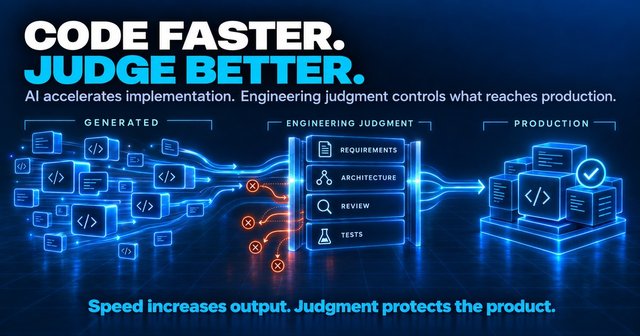
AI Coding Agents Move the Bottleneck From Code Generation to Engineering Judgment
AI agents can generate code quickly, but reliable delivery still depends on clear requirements, technical judgment, risk-based review and accountable production ownership.
Read insight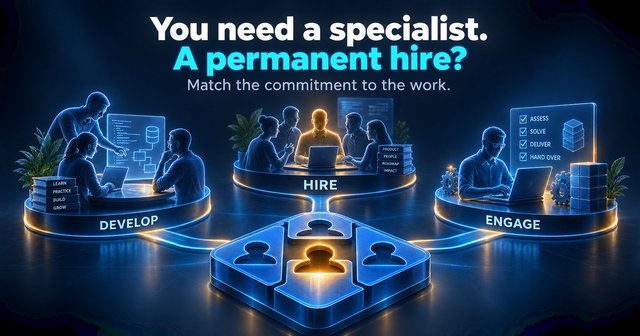
NGBS INSIGHT
You Need a Specialist. Do You Need a Permanent Hire?
A critical skills gap does not always require a permanent role. Assess the workload, urgency and ongoing ownership before choosing how to close it.
Read insight